





You got your authority. You bought the truck. You signed up for a free load board to find freight. Then the first broker you contact asks, "How long have you had authority?" and the call goes quiet.
It's one of the most common things new carriers in our community tell us about. The good news: "no broker will touch a new MC" isn't true. Some carriers report getting set up with several brokers in their first two weeks. Others wait 90 days or more for the better-paying freight.
This guide covers why brokers hesitate, what they check, how to find the ones likely to say yes, and how to vet them back. It also lays out a plan for your first 180 days and what to do when a broker says no.
Do freight brokers work with new authorities?
Yes, some do. Not every broker accepts new authorities, and from what drivers tell us, the ones that do tend to set their own rules. Some will onboard you the day your authority goes active. Others want 30, 60, or 90 days. A few want 6 months or more, plus a clean safety record.
Why brokers hesitate
It helps to know what the broker is worried about. When you know their concerns, you can address them before they ask.
Insurance minimums. Federal law requires at least $750,000 in liability coverage for general freight. Many brokers and their shippers ask for more, commonly $1 million in auto liability and $100,000 in cargo. Some also check that your insurer is financially strong.
Authority age. A broker's own insurance or shipper contracts often set a minimum number of days. The person on the phone may not be able to waive it.
No safety or claims history. A new carrier has no inspections, no CSA data, and no claims record. To a broker, that means no proof of how you run.
Fraud and double brokering. This is the big one right now. Scammers set up fresh authorities, take loads, and disappear or steal the freight. Many brokers now see zero roadside inspections as a sign of a possible shell company. That's frustrating if you're legit, but it explains a lot of the no's.
Reputation risk. If a load goes wrong, the broker answers to the shipper. On a high-value or time-sensitive load, many brokers stick with carriers they already know.
Broker liability. In May 2026, the Supreme Court ruled in Montgomery v. Caribe Transport II that federal law doesn't automatically shield brokers from negligent-selection claims. If a load goes wrong, a broker may have to show they vetted you properly. With a short track record, expect more paperwork questions. See our breakdown of the Montgomery ruling.
What's different in 2026
FMCSA launched its new registration system, MOTUS, in May 2026. It adds stronger identity verification for new registrants. Despite what some sites say, MC numbers weren't eliminated at launch. FMCSA still identifies carriers by USDOT number, and any phase-out of MC numbers needs future rule making.
What brokers look for in a new carrier
Most brokers check the same core items before they'll tender you a load. Exact thresholds vary by broker, so ask each one for their requirements.
Requirement | Why it matters | How to prepare |
|---|---|---|
Active operating authority and USDOT number | Brokers can only legally use carriers with active for-hire authority. They check FMCSA's SAFER system first. | Look yourself up on SAFER. Make sure your status is active and your legal name matches your paperwork exactly. |
Authority age | Many brokers have a minimum, often 30, 60, or 90 days. | Know your exact grant date. Ask each broker for their minimum upfront so you don't waste time. |
Certificate of insurance (COI) | Proves you carry the coverage the broker and shipper require. | Ask your agent for a COI listing auto liability and cargo limits. Get it sent straight from the agent, since many brokers verify with them. |
W-9 | Brokers need your tax ID to pay you. | Fill it out with the exact business name and EIN on file with the IRS. |
Carrier packet and broker-carrier agreement | The packet is how the broker onboards you. The agreement sets payment and liability terms. | Keep a ready-to-send packet. Read every agreement before you sign, especially payment terms and fines. |
Onboarding platform profile | Many brokers onboard through third-party tools like Highway, RMIS, or MyCarrierPackets that check identity and compliance. | Create your profiles early and complete every field. Keep your info identical across all of them. |
Business identity | Brokers look for a real business: a physical address, phone, and email that match FMCSA records. | Use a business email, not a free one. Update your FMCSA record if your address or phone changes. |
Safety and inspection history | Inspections show you're actually running trucks. A clean inspection helps more than no inspection. | Keep your truck road-ready so early inspections are clean. Save copies of every inspection report. |
Truck and driver verification | Some brokers ask for truck photos, plates, VIN, or a CDL copy to fight identity fraud. | Have these ready. Share them only through the broker's official onboarding channel, never a random text or email. |
ELD | Proves hours-of-service compliance. Some brokers also use it for tracking. | Make sure your ELD is on FMCSA's registered device list. |
Notice of Assignment (NOA), if you factor | Tells the broker to pay your factoring company, not you. | Your factoring company provides it. Send it with every new packet. |
For a full walkthrough of what goes in a packet, see our guide to carrier packet essentials. For insurance basics, see owner-operator insurance explained.
Broker qualification guide: how to find brokers likely to say yes
The fastest path is to prep once, then qualify each broker with one question before you spend time on their packet.
Build your packet before your authority goes active. Have your COI, W-9, authority letter, and business details in one folder so you can send them in minutes.
Check your own FMCSA record. Brokers see what SAFER shows. Fix any wrong address, phone, or email in Motus before you start calling.
Set up your onboarding platform profiles. Many brokers won't onboard you any other way. A complete profile makes you look established.
Start with brokers drivers name most often. In driver forums and videos, C.H. Robinson and TQL come up most for new authorities. Policies vary by office and change over time, so treat this as what drivers report, not a guarantee.
Call smaller regional brokers in your home lanes. They often make decisions by person, not by policy. A good phone call can matter more than your authority date.
Ask the qualifying question first. "What's your minimum authority age and insurance requirement?" If you don't meet it yet, note the date you will and move on.
Start with lower-risk freight. Brokers are more willing to try a new carrier on a lower-value load (AKA "cheap freight") with flexible timing. Prove yourself there, then ask for more.
Track every broker. Keep a simple broker sheet: broker name, contact, lane, rate, their minimum, the date you qualify, and whether you're approved. Work those contacts for repeat loads.
Follow up after every good load. Thank them, confirm you're available for that lane again, and ask what else they move.
Pro tips from drivers
Answer the phone like a business. Brokers say how the call goes is part of the decision.
Be ready to explain why your MC is new. If you have years of driving experience, say so.
Don't race to the bottom on rates to get loads. Know your cost per mile and walk away from loads that lose money.
Keep your insurance paid. Drivers report that a lapse can make an older authority look new again to brokers.
Never run under someone else's authority to skip the wait. It can put your business and your insurance at risk.
Collect references. Some brokers will take a chance on you if another broker you've hauled for vouches for you, and they do call.
Know your equipment's market. Carriers report that flatbed and specialized freight moves more often through smaller brokers and direct shippers, who may care less about MC age.
Be ready to accept load tracking. Some brokers that take new authorities ask you to share location through a tracking app for every load.
For more on turning first loads into repeat freight, see 5 tips to building broker relationships.
Brokers carriers report working with new authorities
These are brokers that carriers in TruckSmarter's community of drivers report onboarding new authorities, grouped by how old your authority usually needs to be. Use it as a starting point. Requirements vary by office, equipment, and freight type, and they change often.
Authority age | Brokers carriers report working with |
|---|---|
Day 1 | C.H. Robinson, Allen Lund Company, Nolan Transportation Group (NTG), Trident Transport |
30 days | Coyote, Fifth Wheel Freight, Molo, TQL, Uber Freight |
60 days | Werner |
90 days | Flock Freight, J.B. Hunt, RXO (formerly XPO), Sureway Transportation |
180 days | Arrive Logistics, Edge Logistics, Trinity Logistics |
Some carriers report TQL onboarding them on day one, so it's worth asking before you wait. Whichever brokers you call, vet each one with the steps in the next section before you haul.
How to vet a broker before you haul
Vetting goes both ways. New authorities are a top target for fraud, so check every new broker before you dispatch the truck.
1. Confirm their license and bond with FMCSA. Look up the broker on SAFER. Check that they hold active broker authority, not just carrier authority, and that a BMC-84 bond or BMC-85 trust is on file. Since January 16, 2026, FMCSA can suspend a broker whose financial security drops below $75,000 and isn't restored within 7 days
2. Match their contact info. The name, phone, and email on the rate confirmation should match FMCSA records and the broker's real website. If anything is off, call the broker back on the number listed with FMCSA, not the one that called you.
3. Check credit and payment history. Look for the broker's average days to pay and any complaints. Your factoring company can usually run a broker credit check. Other carriers in your network are a good second opinion.
4. Get a signed rate confirmation. Never move a load without one. Make sure it lists the rate, pickup and delivery details, and payment terms.
Red flags
The rate is much higher than the lane usually pays.
They push you to accept right now.
They use a free email address (Gmail, Yahoo, Outlook) instead of a company domain.
The MC or USDOT number doesn't match the company name, or the authority is inactive.
Pickup or delivery details are vague or say "TBD."
They ask you to skip or change the rate confirmation.
Double-brokering warning signs
The shipper's paperwork at pickup lists a different broker than the one who booked you.
The broker tells you not to talk to the shipper or receiver.
Your rate con comes from one company and payment instructions from another.
You get a last-minute delivery address change by text or phone only.
If something feels wrong, don't move the freight. For a full breakdown, see how to spot fake load postings and our coverage of the FMCSA fraud crackdown.
Common mistakes and scams aimed at new authorities
Scammers know new carriers are eager for loads, which makes the first few months the riskiest.
Mistakes that cost new carriers
Taking every load at any rate. Cheap freight can keep the wheels turning while the business loses money.
Sending incomplete or mismatched packets. An expired COI or a business name that doesn't match SAFER is one of the most common reasons packets get rejected.
Letting insurance lapse. Even a short lapse can trigger a revocation and reset how brokers see your authority.
Ignoring the new entrant safety audit. FMCSA audits new carriers within 12 months of starting operations. Some violations, like having no drug and alcohol testing program, are an automatic fail (FMCSA).
Paying for "broker lists." Paid lists of brokers that "accept new MCs" are everywhere. Most of the same names are free to find, and lists go out of date fast.
Paying a dispatcher upfront with no contract. Know exactly what you're paying for and how to cancel before you share your login or documents. Be careful with "DM me" offers in forum comments and social groups.
Scams to watch for
Deposit or setup fee for a lane. Someone offers "exclusive" high-paying freight to new DOT numbers, then asks for a deposit or insurance fee. Real brokers pay you. You don't pay them.
Double brokering. A scammer books a real load, hands it to you while posing as the broker, collects payment, and disappears.
Fake delivery address change. A text or call near delivery sends you to a new address where the cargo is stolen. Confirm any change in writing with the broker on a verified number.
Phishing for your FMCSA login. Emails posing as FMCSA or a load board ask you to "update" your account. If someone gets in, they can change your contact or payment info. Log in only by typing the official site address yourself.
Identity cloning. Someone uses your MC or USDOT number to book loads. Check your SAFER record often and report anything you didn't change.

Broker outreach scripts
Brokers field a lot of carrier calls, and a clear first pitch is often what gets your packet a look. The scripts below cover a first phone call, an intro email, and the “How long have you had authority?” question. Copy them, then make them your own. Keep it short, confident, and honest about your authority age.
Phone script
Hi, this is [Name] with [Company], MC [number], USDOT [number].
I run a [equipment type] out of [home city] and I'm looking for freight in [lanes or region].
Before I send my packet, what's your minimum authority age and insurance requirement?
[If they say yes]
Great. I'll send my packet today. Who should I send it to, and what lanes are you moving most right now?
[If they say not yet]
Understood. I'll hit [their minimum] on [date]. Can I reach back out to you then?
Email script
Subject: New carrier setup: [Company], MC [number], [equipment type]
Hi [Name],
I'm [Name] with [Company]. We run [number] [equipment type] based in [city, state] and are looking for freight in [lanes or region].
Our details:
- MC [number] / USDOT [number]
- Authority active since [date]
- Auto liability: $[amount] / Cargo: $[amount]
- ELD: [provider]
Our carrier packet is attached. Could you let me know your onboarding requirements and the best way to get set up?
Thanks,
[Name]
[Phone] | [Business email]
Answering "How long have you had authority?"
[Number] days. I know that's new, so here's what I can tell you:
I have [years] years of driving experience, [clean record / no violations],
and I carry $[amount] auto liability and $[amount] cargo.
I'm happy to start on a smaller load so you can see how I run.
What would you need from me to give it a shot?
What to do when brokers say no
A "not yet" from a big broker doesn't mean you sit still. These options keep freight moving while your authority ages.
Direct shippers. Local manufacturers, distributors, and suppliers sometimes ship directly with small carriers. It takes legwork and patience, and many shippers have their own carrier requirements. One steady local customer can carry you through slow weeks.
Smaller regional brokers. They often have more room to make their own call and care more about service in their lanes than your authority date.
Broker-connected load boards. Some load boards let you book directly with brokers who already accept your setup, so you're not cold-calling every post. Check each listing's requirements before you bid.
Factoring or quick pay. Neither gets you more loads, but both fix the cash flow gap while you wait 30 days or more for payment. Carriers often say slow payment, not the driving, is what sinks new authorities. Factoring companies can also run credit checks on brokers before you haul. Read the terms carefully: fees, recourse, and contract length vary a lot. See what to consider when choosing a freight factoring company.
You can also find more freight on your own with the strategies in how to find loads without a dispatcher and how to find backhauls using a free load board.
Find freight while you build broker relationships
The TruckSmarter load board is free, so you can search freight from day one without adding another bill while your authority is new.
Free. No trial, no credit card, and no commission.
100K+ loads a day. More listings means more chances to find brokers in your lanes.
Bid and book in the app. You can bid on and book most listings without a phone call.
Your broker accounts, in one place. Connect your broker accounts and filter by freight source to focus on brokers you're already set up with.
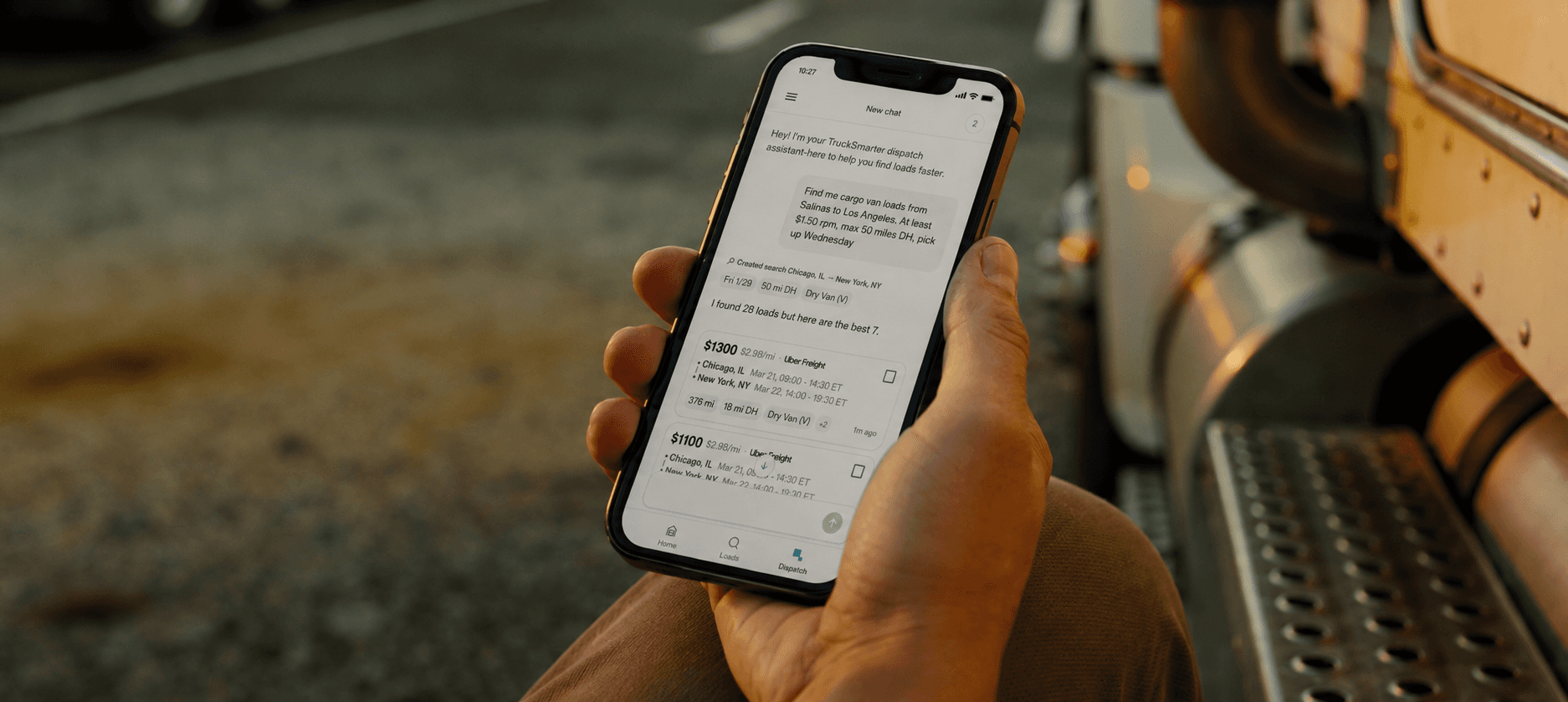
Optional Dispatch assistant. Dispatch can search loads for you right after sign-up. Bidding and booking require MC or DOT verification, and you always make the final booking decision. There's no dispatcher fee.
Broker acceptance still varies by broker, so check each load's requirements before you bid.
Your first 180 days: a timeline
More brokers open up as your authority ages. Here's what to focus on at each stage.
Window | Your focus | What to do | What opens up |
|---|---|---|---|
Day 0 to 30 | Get set up and get rolling | Finish your carrier packet and onboarding profiles. Check your SAFER record. Call brokers that accept day-one authorities. Book lower-risk loads. Start tracking every broker you contact. | Brokers with no minimum age, smaller regional brokers, and broker-connected load boards. |
Day 30 to 90 | Build a track record | Go back to brokers with 30, 60, or 90-day minimums as you hit them. Keep every inspection report and delivery on time. Ask good brokers for repeat lanes. Set up factoring or quick pay if cash flow is tight. | More mid-size and large brokers. Repeat freight from brokers you've already hauled for. |
Day 90 to 180 | Grow and get selective | Contact brokers with 6-month minimums. Start reaching out to direct shippers in your home lanes. Prepare for your new entrant safety audit. Drop loads and brokers that don't pay well or on time. | Brokers with stricter requirements and higher-value freight. A shortlist of brokers you trust. |
The new entrant safety audit happens within 12 months of starting operations, and FMCSA keeps monitoring you for your first 18 months.
Keep building, one broker at a time
A new authority doesn't mean no freight. Some brokers will work with you on day one, and more open up at 30, 90, and 180 days. Get your paperwork ready before you call, qualify each broker with one question, vet every broker before you haul, and keep a broker sheet so good loads turn into repeat lanes. The first few months are the hardest, and every clean load makes the next yes easier.
While you build those relationships, the TruckSmarter load board gives you a free place to find freight. New authorities use it because it works on your phone and your desktop, it's simple to search, bid, and book, and it costs nothing: no trial, no credit card, and no commission. Ever. Sign up free and start finding loads today.

" width="119.06490624254943px"><path d="M 0 80 L 0 0 L 119.055 0 L 119.055 80 Z" fill="transparent" height="80px" id="arm9ASlB9" transform="translate(0.004 0.002)" width="119.055px"/><path d="M 13.744 46.943 C 16.144 48.416 18.378 49.806 20.633 51.156 C 21.93 51.932 23.2 52.841 24.603 53.353 C 27.895 54.557 29.689 57.23 31.474 59.943 C 31.72 60.318 31.773 60.861 31.799 61.333 C 32.024 65.021 33.822 67.716 36.886 69.661 C 37.264 69.9 37.646 70.248 37.844 70.636 C 38.803 72.507 40.148 73.967 41.972 75.026 C 42.676 75.431 43.449 75.895 43.898 76.539 C 45.854 79.371 48.395 80.513 51.714 79.79 C 54.519 79.177 56.854 77.977 57.337 74.673 C 57.742 74.902 58.115 75.118 58.533 75.352 C 58.929 74.92 59.364 74.549 59.672 74.095 C 60.551 72.78 61.632 72.432 63.105 73.098 C 63.888 73.451 64.793 73.534 65.58 73.883 C 65.875 74.015 66.073 74.545 66.147 74.924 C 66.209 75.224 66.015 75.573 65.928 75.952 C 68.029 75.423 69.541 74.104 69.62 72.749 C 69.449 72.688 69.269 72.608 69.084 72.56 C 68.816 72.493 68.539 72.445 68.266 72.396 C 63.237 71.563 58.946 69.26 55.262 65.775 C 55.034 65.559 55.02 65.109 54.906 64.769 C 55.258 64.84 55.675 64.818 55.948 65.007 C 56.599 65.466 57.161 66.044 57.786 66.542 C 59.949 68.254 62.283 69.657 64.868 70.433 C 65.585 69.489 66.191 68.589 66.917 67.8 C 67.154 67.539 67.734 67.389 68.09 67.469 C 69.365 67.756 70.605 68.184 71.867 68.528 C 73.019 68.841 73.142 69.154 72.478 70.195 C 72.197 70.636 71.911 71.077 71.546 71.646 C 74.017 71.082 75.991 68.881 76.373 66.406 C 73.498 66.37 70.781 65.625 68.231 64.385 C 66.121 63.357 64.107 62.136 62.076 60.953 C 61.857 60.825 61.808 60.397 61.681 60.111 C 61.993 60.102 62.331 60.018 62.617 60.111 C 62.951 60.212 63.233 60.477 63.545 60.649 C 65.549 61.761 67.559 62.868 69.585 63.984 C 70.407 62.903 71.018 61.955 71.779 61.152 C 72.161 60.75 72.821 60.389 73.353 60.397 C 74.496 60.406 75.634 60.711 76.786 60.808 C 77.556 60.869 77.863 61.112 77.679 61.928 C 77.437 62.983 77.283 64.059 77.085 65.144 C 79.899 64.981 82.084 61.531 81.007 58.981 C 80.739 58.346 80.879 58.051 81.306 57.667 C 83.319 55.867 85.561 54.61 88.406 54.654 C 88.625 55.157 88.863 55.664 89.069 56.18 C 89.61 57.526 90.19 57.852 91.54 57.358 C 97.409 55.205 103.261 53 109.134 50.851 C 112.418 49.647 115.728 48.518 119.065 47.344 C 118.977 47.08 118.92 46.855 118.832 46.643 C 116.15 40.149 114.058 33.471 112.51 26.611 C 111.952 24.14 111.319 21.688 110.699 19.147 C 110.202 19.301 109.934 19.354 109.688 19.46 C 106.896 20.629 104.127 21.86 101.309 22.967 C 95.154 25.389 88.973 27.749 82.805 30.14 C 81.495 30.647 81.275 31.207 81.807 32.553 C 81.978 32.99 82.119 33.435 82.286 33.912 C 81.438 34.207 80.642 34.375 79.956 34.75 C 77.156 36.281 74.324 36.064 71.418 35.107 C 67.075 33.678 62.661 33.488 58.19 34.467 C 57.931 34.525 57.548 34.467 57.355 34.304 C 54.893 32.227 51.978 31.441 48.848 31.23 C 45.076 30.974 41.484 31.913 37.879 32.813 C 37.475 32.915 36.947 33.065 36.635 32.893 C 32.854 30.837 29.096 28.737 25.359 26.598 C 25.069 26.43 24.831 25.857 24.858 25.495 C 24.924 24.665 24.673 24.048 23.965 23.686 C 20.598 21.957 17.226 20.236 13.823 18.578 C 13.449 18.397 12.579 18.481 12.434 18.728 C 12.016 19.46 12.724 19.738 13.269 20.003 C 15.203 20.947 17.155 21.864 19.072 22.844 C 20.233 23.435 21.345 24.123 22.514 24.785 C 18.839 31.922 14.008 38.279 11.563 46.052 C 8.372 44.389 5.435 42.858 2.498 41.336 C 1.966 41.062 1.439 40.745 0.872 40.599 C 0.63 40.538 0.186 40.78 0.032 41.018 C -0.074 41.177 0.102 41.609 0.269 41.834 C 0.423 42.042 0.722 42.152 0.968 42.28 C 4.463 44.111 7.954 45.955 11.462 47.763 C 12.372 48.231 13.256 48.302 13.744 46.934 Z M 48.307 17.466 C 47.402 18.445 46.223 19.394 44.452 19.045 C 43.85 18.926 43.085 18.794 43.107 19.663 C 43.115 20.034 43.775 20.616 44.223 20.713 C 46.404 21.189 48.079 20.197 49.547 18.679 C 49.82 18.397 50.29 18.009 50.58 18.075 C 54.37 18.953 57.469 17.351 60.428 15.349 C 63.76 13.09 66.591 10.258 69.198 7.201 C 69.484 6.866 69.867 6.561 70.007 6.173 C 70.135 5.825 69.985 5.375 69.959 4.969 C 69.563 5.004 69.106 4.933 68.785 5.11 C 68.42 5.313 68.192 5.745 67.888 6.063 C 66.222 7.788 64.626 9.596 62.859 11.211 C 60.309 13.536 57.588 15.675 54.097 16.399 C 53.183 16.588 52.194 16.429 51.323 16.429 C 51.578 15.075 51.943 13.911 51.987 12.737 C 52.062 10.659 50.8 9.173 49.204 9.186 C 47.643 9.199 46.316 10.748 46.232 12.68 C 46.215 13.037 46.188 13.443 46.338 13.743 C 46.922 14.934 47.573 16.09 48.312 17.466 Z M 76.654 61.893 C 75.56 61.725 74.513 61.549 73.463 61.412 C 73.252 61.386 72.931 61.403 72.821 61.536 C 72.135 62.387 71.493 63.278 70.711 64.324 C 71.933 64.632 72.94 64.954 73.973 65.135 C 75.788 65.457 75.797 65.422 76.268 63.591 C 76.404 63.058 76.514 62.51 76.65 61.897 Z M 66.117 70.848 C 66.785 70.989 67.4 71.108 68.011 71.241 C 69.527 71.57 70.664 71.089 71.423 69.798 C 71.458 69.736 71.462 69.657 71.48 69.577 C 70.908 69.405 70.346 69.22 69.774 69.057 C 68.209 68.616 67.01 69.111 66.178 70.544 C 66.161 70.574 66.161 70.619 66.117 70.839 Z M 14.676 66.79 C 14.425 65.166 14.298 63.935 14.008 62.744 C 13.915 62.361 13.392 62.078 13.071 61.752 C 12.834 62.136 12.372 62.528 12.394 62.894 C 12.473 64.16 12.654 65.426 12.939 66.662 C 13.041 67.094 13.568 67.42 13.902 67.8 C 14.214 67.394 14.526 66.988 14.672 66.794 Z M 7.308 70.808 C 8.772 70.557 9.967 70.424 11.115 70.111 C 11.493 70.01 11.744 69.441 12.056 69.083 C 11.638 68.876 11.207 68.47 10.807 68.497 C 9.66 68.581 8.508 68.77 7.391 69.061 C 7.009 69.163 6.736 69.683 6.411 70.014 C 6.749 70.31 7.084 70.61 7.312 70.808 Z M 59.566 76.067 C 61.039 76.164 62.287 76.243 63.54 76.322 C 64.578 76.389 65.079 75.956 64.912 74.88 C 61.267 73.57 61.197 73.583 59.566 76.062 Z M 15.744 74.104 C 15.608 72.82 15.599 71.849 15.366 70.936 C 15.261 70.513 14.715 70.204 14.368 69.842 C 14.113 70.27 13.638 70.702 13.643 71.13 C 13.652 72.07 13.819 73.032 14.087 73.936 C 14.197 74.302 14.694 74.708 15.072 74.787 C 15.283 74.831 15.626 74.231 15.744 74.104 Z M 91.039 1.991 C 91.039 1.523 91.096 1.329 91.03 1.206 C 90.793 0.778 90.564 0.081 90.23 0.019 C 89.434 -0.126 89.338 0.584 89.302 1.223 C 89.25 2.141 89.109 3.063 89.144 3.976 C 89.157 4.32 89.549 4.651 89.764 4.986 C 90.103 4.722 90.648 4.514 90.74 4.179 C 90.964 3.381 90.977 2.52 91.039 1.991 Z M 90.287 8.498 C 90.081 8.224 89.808 7.488 89.404 7.408 C 88.564 7.241 88.617 8.105 88.516 8.661 C 88.366 9.486 88.199 10.32 88.181 11.153 C 88.173 11.498 88.542 11.846 88.74 12.195 C 89.091 11.947 89.654 11.767 89.76 11.44 C 90.023 10.611 90.085 9.72 90.283 8.493 Z M 85.662 7.664 C 85.662 7.664 85.662 7.638 85.662 7.624 C 86.023 7.624 86.432 7.735 86.726 7.598 C 87.1 7.426 87.377 7.046 87.698 6.76 C 87.377 6.482 87.087 6.023 86.731 5.97 C 85.952 5.855 85.135 5.895 84.348 5.988 C 84.084 6.019 83.653 6.416 83.666 6.623 C 83.688 6.932 83.97 7.364 84.251 7.488 C 84.669 7.668 85.183 7.62 85.654 7.668 Z M 17.683 69.203 C 18.637 69.017 19.292 68.969 19.872 68.739 C 20.158 68.625 20.541 68.086 20.47 67.892 C 20.351 67.57 19.916 67.191 19.591 67.164 C 18.971 67.12 18.298 67.213 17.723 67.438 C 17.322 67.592 17.046 68.064 16.716 68.395 C 17.089 68.704 17.463 69.017 17.683 69.198 Z M 95.708 7.933 L 95.387 7.28 C 94.912 6.994 94.472 6.597 93.962 6.447 C 93.4 6.283 92.771 6.323 92.178 6.358 C 92.129 6.358 91.997 7.232 92.103 7.28 C 92.938 7.677 93.804 8.026 94.692 8.264 C 94.982 8.343 95.369 8.057 95.712 7.933 Z" fill="rgb(255, 255, 255)" height="80.00144772270971px" id="YehhatbY8" transform="translate(0 0)" width="119.06490624251232px"/><path d="M 13.744 28.453 C 13.256 29.821 12.372 29.75 11.462 29.283 C 7.954 27.474 4.463 25.635 0.968 23.799 C 0.722 23.672 0.423 23.561 0.269 23.354 C 0.102 23.129 -0.074 22.697 0.032 22.538 C 0.186 22.304 0.63 22.057 0.872 22.119 C 1.439 22.269 1.966 22.582 2.498 22.855 C 5.435 24.377 8.367 25.908 11.563 27.571 C 14.008 19.798 18.839 13.437 22.514 6.304 C 21.345 5.642 20.233 4.954 19.072 4.363 C 17.155 3.384 15.203 2.466 13.269 1.522 C 12.724 1.257 12.016 0.98 12.434 0.247 C 12.575 0 13.449 -0.084 13.823 0.097 C 17.226 1.756 20.598 3.476 23.965 5.206 C 24.673 5.567 24.924 6.185 24.858 7.014 C 24.831 7.376 25.064 7.949 25.359 8.117 C 29.096 10.257 32.854 12.356 36.635 14.412 C 36.947 14.58 37.475 14.434 37.879 14.333 C 41.484 13.433 45.076 12.493 48.848 12.749 C 51.983 12.961 54.893 13.746 57.355 15.824 C 57.548 15.987 57.931 16.044 58.19 15.987 C 62.661 15.008 67.075 15.193 71.418 16.627 C 74.324 17.584 77.151 17.8 79.956 16.269 C 80.642 15.894 81.442 15.727 82.286 15.431 C 82.119 14.955 81.978 14.505 81.807 14.072 C 81.275 12.727 81.495 12.167 82.805 11.659 C 88.973 9.268 95.154 6.908 101.309 4.487 C 104.127 3.379 106.896 2.149 109.688 0.98 C 109.934 0.878 110.202 0.821 110.699 0.666 C 111.319 3.207 111.956 5.66 112.51 8.13 C 114.053 14.986 116.15 21.664 118.832 28.162 C 118.92 28.374 118.977 28.599 119.065 28.864 C 115.733 30.037 112.422 31.171 109.134 32.371 C 103.261 34.519 97.409 36.725 91.54 38.877 C 90.19 39.372 89.61 39.045 89.069 37.7 C 88.863 37.184 88.625 36.681 88.406 36.173 C 85.561 36.134 83.324 37.386 81.306 39.186 C 80.875 39.57 80.739 39.861 81.007 40.501 C 82.079 43.046 79.899 46.5 77.085 46.664 C 77.283 45.574 77.437 44.502 77.679 43.448 C 77.863 42.632 77.556 42.393 76.786 42.327 C 75.639 42.23 74.5 41.93 73.353 41.917 C 72.821 41.912 72.161 42.27 71.779 42.671 C 71.014 43.474 70.403 44.423 69.585 45.503 C 67.563 44.387 65.554 43.28 63.545 42.168 C 63.233 41.996 62.951 41.732 62.617 41.63 C 62.331 41.542 61.997 41.63 61.681 41.63 C 61.808 41.917 61.857 42.345 62.076 42.473 C 64.107 43.655 66.121 44.877 68.231 45.905 C 70.781 47.149 73.502 47.89 76.373 47.925 C 75.991 50.4 74.017 52.597 71.546 53.166 C 71.911 52.597 72.197 52.156 72.478 51.715 C 73.142 50.673 73.019 50.36 71.867 50.047 C 70.605 49.703 69.361 49.275 68.09 48.988 C 67.73 48.909 67.154 49.054 66.917 49.319 C 66.196 50.109 65.589 51.009 64.868 51.953 C 62.283 51.176 59.949 49.778 57.786 48.062 C 57.161 47.568 56.594 46.986 55.948 46.527 C 55.68 46.337 55.258 46.364 54.906 46.289 C 55.02 46.628 55.029 47.074 55.262 47.294 C 58.946 50.779 63.237 53.082 68.266 53.916 C 68.539 53.96 68.816 54.008 69.084 54.079 C 69.273 54.128 69.453 54.207 69.62 54.269 C 69.537 55.623 68.025 56.942 65.928 57.471 C 66.02 57.096 66.209 56.743 66.147 56.444 C 66.068 56.064 65.875 55.53 65.58 55.402 C 64.793 55.05 63.888 54.97 63.105 54.617 C 61.632 53.951 60.555 54.3 59.672 55.614 C 59.364 56.069 58.933 56.439 58.533 56.871 C 58.115 56.633 57.742 56.421 57.337 56.192 C 56.849 59.496 54.515 60.696 51.714 61.309 C 48.395 62.033 45.854 60.89 43.898 58.058 C 43.454 57.414 42.676 56.951 41.972 56.545 C 40.148 55.491 38.803 54.031 37.844 52.156 C 37.646 51.767 37.26 51.423 36.886 51.181 C 33.826 49.235 32.024 46.54 31.799 42.852 C 31.773 42.38 31.72 41.838 31.474 41.463 C 29.689 38.75 27.891 36.076 24.603 34.872 C 23.2 34.36 21.934 33.452 20.633 32.675 C 18.378 31.325 16.144 29.931 13.744 28.462 Z M 87.584 34.541 C 85.917 28.705 84.251 22.864 82.55 16.905 C 81.503 17.377 80.488 17.932 79.406 18.294 C 78.255 18.682 77.015 19.194 75.863 19.101 C 73.973 18.947 72.095 18.426 70.253 17.919 C 67.136 17.054 64.006 16.662 60.784 17.116 C 58.181 17.482 55.574 17.791 52.967 18.135 C 52.708 18.171 52.457 18.285 52.207 18.36 C 52.158 19.119 52.075 19.798 52.079 20.473 C 52.088 21.488 51.605 21.92 50.62 21.929 C 49.143 21.942 47.665 22.053 46.188 22 C 45.168 21.964 44.597 21.342 44.667 20.253 C 44.72 19.468 44.786 18.682 44.865 17.628 C 43.968 18.179 43.186 18.519 42.597 19.066 C 42.21 19.428 41.911 20.085 41.898 20.614 C 41.862 22.053 43.291 23.989 44.68 24.307 C 47.164 24.871 49.661 25.44 52.185 25.736 C 56.542 26.248 60.969 26.385 64.855 28.775 C 65.211 28.996 65.396 29.499 65.664 29.869 C 65.18 29.989 64.626 30.319 64.231 30.187 C 63.184 29.825 62.217 29.23 61.193 28.793 C 60.652 28.564 60.054 28.484 59.478 28.339 C 59.425 28.449 59.368 28.559 59.316 28.665 C 59.949 29.314 60.485 30.121 61.232 30.58 C 63.545 31.983 65.844 33.478 68.319 34.523 C 71.946 36.054 75.722 37.232 79.565 38.608 C 83.126 35.516 83.785 35.176 87.57 34.541 Z M 39.414 51.582 C 40.398 53.792 43.247 56.099 44.729 55.773 C 44.061 55.005 43.401 54.273 42.764 53.519 C 42.337 53.016 42.082 52.429 42.742 51.962 C 43.788 51.216 44.883 50.537 45.977 49.866 C 46.668 49.443 47.292 49.685 47.802 50.228 C 48.536 51.009 49.239 51.816 49.995 52.663 C 50.927 51.154 50.765 50.104 49.648 49.165 C 48.061 47.828 45.138 47.762 43.353 48.988 C 42.078 49.862 40.777 50.687 39.414 51.578 Z M 33.721 44.405 C 34.147 46.769 36.055 49.187 37.866 49.619 C 37.484 48.9 37.075 48.256 36.802 47.563 C 36.657 47.197 36.609 46.677 36.758 46.333 C 37.101 45.534 40.064 44.237 40.86 44.52 C 41.234 44.652 41.55 45.018 41.823 45.34 C 42.188 45.768 42.491 46.253 42.816 46.712 C 42.948 46.646 43.085 46.575 43.216 46.509 C 42.988 45.834 42.887 45.08 42.513 44.502 C 41.55 43.002 39.585 42.411 37.726 42.998 C 36.402 43.417 35.101 43.915 33.716 44.405 Z M 55.473 57.154 C 55.544 56.951 55.601 56.841 55.618 56.721 C 55.847 55.398 55.231 54.335 53.855 53.66 C 52.515 53.003 51.903 53.175 50.813 54.233 C 50.075 54.952 49.248 55.61 48.364 56.135 C 47.468 56.669 46.461 57.008 45.423 57.467 C 46.456 58.821 47.67 59.651 49.477 60.048 C 49.222 59.426 48.932 59.055 48.958 58.711 C 49.002 58.16 49.094 57.436 49.455 57.123 C 51.301 55.517 53.64 55.561 55.473 57.154 Z M 49.015 53.792 C 46.575 51.004 46.786 50.784 44.214 52.57 C 45.63 55.376 46.698 55.663 49.015 53.792 Z M 46.18 20.394 L 50.439 20.394 L 50.439 18.378 C 49.705 18.316 49.072 18.294 48.448 18.197 C 47.833 18.1 47.226 17.924 46.536 17.765 C 46.413 18.669 46.303 19.485 46.18 20.389 Z M 38.297 47.012 C 38.754 47.89 39.176 48.71 39.638 49.597 C 40.425 49.129 41.124 48.715 41.902 48.252 C 41.344 47.449 40.851 46.747 40.341 46.011 C 39.625 46.359 38.987 46.672 38.297 47.012 Z M 54.462 58.579 C 53.935 58.01 53.592 57.639 53.222 57.242 C 52.308 57.608 51.437 57.961 50.571 58.31 C 51.09 59.902 51.095 59.928 52.51 59.452 C 53.13 59.245 53.71 58.923 54.462 58.579 Z" fill="rgb(28, 28, 28)" height="61.52091093053766px" id="AUI_ToKxq" transform="translate(0 18.49)" width="119.06490624251232px"/><path d="M 5.206 12.497 C 4.471 11.125 3.816 9.965 3.232 8.774 C 3.082 8.474 3.113 8.064 3.126 7.711 C 3.21 5.779 4.537 4.23 6.098 4.217 C 7.694 4.204 8.956 5.686 8.881 7.768 C 8.841 8.946 8.472 10.111 8.217 11.461 C 9.088 11.461 10.077 11.624 10.991 11.43 C 14.482 10.702 17.199 8.567 19.753 6.242 C 21.525 4.628 23.116 2.819 24.782 1.094 C 25.09 0.776 25.319 0.344 25.679 0.141 C 26 -0.035 26.457 0.035 26.853 0 C 26.879 0.406 27.024 0.856 26.901 1.204 C 26.761 1.593 26.378 1.897 26.092 2.232 C 23.485 5.289 20.658 8.121 17.322 10.38 C 14.363 12.387 11.264 13.984 7.474 13.106 C 7.188 13.04 6.718 13.424 6.441 13.71 C 4.973 15.232 3.293 16.225 1.117 15.744 C 0.669 15.647 0.009 15.069 0 14.694 C -0.022 13.825 0.743 13.957 1.346 14.077 C 3.117 14.425 4.3 13.472 5.201 12.497 Z M 6.678 10.764 C 6.841 9.44 7.078 8.293 7.07 7.151 C 7.07 6.758 6.445 6.374 6.107 5.986 C 5.738 6.352 5.206 6.652 5.025 7.098 C 4.515 8.329 5.069 9.595 6.678 10.764 Z" fill="rgb(28, 28, 28)" height="15.86627501441505px" id="yPoKMbiu4" transform="translate(43.102 4.969)" width="26.95005054146612px"/><path d="M 5.939 0.496 C 5.803 1.109 5.698 1.656 5.557 2.19 C 5.087 4.02 5.073 4.056 3.262 3.734 C 2.229 3.553 1.218 3.231 0 2.922 C 0.783 1.876 1.42 0.985 2.11 0.134 C 2.216 0.002 2.541 -0.016 2.752 0.01 C 3.803 0.152 4.849 0.324 5.944 0.491 Z" fill="rgb(28, 28, 28)" height="3.8886439509467223px" id="KE_IYPS9y" transform="translate(70.719 61.396)" width="5.94380000000001px"/><path d="M 0 1.938 C 0.044 1.717 0.044 1.673 0.062 1.642 C 0.894 0.21 2.093 -0.285 3.658 0.156 C 4.229 0.319 4.792 0.5 5.363 0.676 C 5.346 0.756 5.341 0.835 5.306 0.897 C 4.547 2.188 3.41 2.669 1.895 2.339 C 1.284 2.207 0.673 2.084 0 1.947 Z" fill="rgb(28, 28, 28)" height="2.439844994446446px" id="Lp02kc33H" transform="translate(66.117 68.91)" width="5.363399999999999px"/><path d="M 2.278 5.042 C 2.129 5.236 1.821 5.642 1.509 6.048 C 1.175 5.673 0.647 5.342 0.546 4.91 C 0.256 3.679 0.08 2.409 0.001 1.142 C -0.021 0.776 0.44 0.384 0.678 0 C 1.003 0.326 1.522 0.609 1.614 0.992 C 1.904 2.184 2.027 3.414 2.282 5.038 Z" fill="rgb(28, 28, 28)" height="6.048000000000002px" id="k7R2ADIbW" transform="translate(12.398 61.748)" width="2.2823591652395763px"/><path d="M 0.901 2.313 C 0.677 2.115 0.339 1.815 0 1.519 C 0.325 1.188 0.598 0.668 0.98 0.566 C 2.093 0.275 3.249 0.081 4.396 0.002 C 4.796 -0.029 5.227 0.381 5.645 0.588 C 5.337 0.946 5.082 1.51 4.704 1.616 C 3.557 1.929 2.361 2.062 0.897 2.313 Z" fill="rgb(28, 28, 28)" height="2.313241858581634px" id="g_CgwalTO" transform="translate(6.41 68.49)" width="5.64475px"/><path d="M 0 2.048 C 1.627 -0.431 1.697 -0.444 5.346 0.866 C 5.513 1.942 5.012 2.374 3.974 2.308 C 2.721 2.229 1.473 2.145 0 2.052 Z" fill="rgb(28, 28, 28)" height="2.3149121127885337px" id="aji9yeYkW" transform="translate(59.566 74.014)" width="5.377398764721633px"/><path d="M 2.101 4.261 C 1.983 4.389 1.644 4.989 1.429 4.945 C 1.046 4.87 0.55 4.464 0.444 4.094 C 0.18 3.189 0.009 2.228 0 1.288 C 0 0.86 0.47 0.428 0.725 0 C 1.073 0.362 1.614 0.671 1.723 1.094 C 1.956 2.007 1.965 2.973 2.101 4.261 Z" fill="rgb(28, 28, 28)" height="4.947511468933342px" id="dFndV1vT1" transform="translate(13.645 69.838)" width="2.1014000000000017px"/><path d="M 1.899 1.991 C 1.838 2.525 1.824 3.381 1.6 4.179 C 1.508 4.514 0.963 4.722 0.624 4.986 C 0.404 4.651 0.018 4.32 0.004 3.976 C -0.026 3.063 0.114 2.141 0.163 1.223 C 0.198 0.584 0.294 -0.126 1.09 0.019 C 1.42 0.081 1.649 0.778 1.89 1.206 C 1.961 1.329 1.899 1.519 1.899 1.991 Z" fill="rgb(28, 28, 28)" height="4.986373229619275px" id="R9TGjE_vm" transform="translate(89.141 0)" width="1.9240640022925533px"/><path d="M 2.101 1.106 C 1.899 2.328 1.842 3.224 1.578 4.053 C 1.473 4.38 0.91 4.561 0.558 4.808 C 0.361 4.459 -0.004 4.111 0 3.767 C 0.018 2.933 0.185 2.099 0.334 1.274 C 0.435 0.714 0.378 -0.146 1.222 0.021 C 1.627 0.101 1.899 0.837 2.106 1.111 Z" fill="rgb(28, 28, 28)" height="4.807577536542174px" id="Q2stYnNDQ" transform="translate(88.187 7.393)" width="2.105839431750411px"/><path d="M 1.987 1.769 C 1.513 1.72 0.998 1.769 0.585 1.588 C 0.304 1.464 0.018 1.036 0 0.723 C -0.013 0.516 0.418 0.119 0.682 0.088 C 1.469 -0.005 2.282 -0.044 3.064 0.07 C 3.416 0.123 3.711 0.582 4.032 0.86 C 3.711 1.147 3.434 1.526 3.06 1.698 C 2.765 1.835 2.357 1.725 1.996 1.725 C 1.996 1.738 1.996 1.751 1.996 1.764 Z" fill="rgb(28, 28, 28)" height="1.7687590190909495px" id="MosVPZvMT" transform="translate(83.676 5.896)" width="4.031596362651712px"/><path d="M 0.967 2.044 C 0.747 1.863 0.374 1.555 0 1.241 C 0.33 0.911 0.607 0.439 1.007 0.284 C 1.583 0.059 2.255 -0.033 2.875 0.011 C 3.2 0.033 3.64 0.417 3.755 0.739 C 3.825 0.933 3.442 1.471 3.157 1.586 C 2.576 1.815 1.921 1.859 0.967 2.049 Z" fill="rgb(28, 28, 28)" height="2.048781677318786px" id="pTC94CglR" transform="translate(16.719 67.158)" width="3.7629630781345362px"/><path d="M 3.649 1.605 C 3.306 1.724 2.919 2.01 2.629 1.935 C 1.741 1.697 0.875 1.344 0.04 0.952 C -0.066 0.903 0.066 0.034 0.115 0.03 C 0.708 -0.001 1.337 -0.045 1.9 0.118 C 2.414 0.268 2.854 0.665 3.324 0.952 L 3.645 1.605 Z" fill="rgb(28, 28, 28)" height="1.9476963300683403px" id="KfpuFUC5I" transform="translate(92.062 6.328)" width="3.6492158017108522px"/><path d="M 45.673 17.637 C 41.888 18.268 41.229 18.607 37.668 21.704 C 33.825 20.332 30.049 19.154 26.422 17.619 C 23.947 16.574 21.643 15.078 19.335 13.675 C 18.588 13.221 18.052 12.409 17.419 11.761 C 17.471 11.65 17.529 11.54 17.581 11.434 C 18.153 11.58 18.755 11.664 19.296 11.889 C 20.325 12.321 21.287 12.921 22.334 13.283 C 22.729 13.419 23.283 13.084 23.767 12.965 C 23.503 12.594 23.318 12.092 22.958 11.871 C 19.067 9.476 14.645 9.343 10.288 8.832 C 7.764 8.536 5.267 7.967 2.783 7.402 C 1.394 7.085 -0.035 5.148 0.001 3.71 C 0.014 3.176 0.308 2.519 0.7 2.162 C 1.289 1.615 2.071 1.271 2.968 0.724 C 2.889 1.778 2.823 2.563 2.77 3.348 C 2.696 4.433 3.267 5.06 4.291 5.095 C 5.764 5.148 7.246 5.033 8.723 5.025 C 9.708 5.016 10.191 4.583 10.182 3.569 C 10.178 2.894 10.262 2.215 10.31 1.456 C 10.56 1.381 10.807 1.266 11.07 1.231 C 13.673 0.887 16.284 0.578 18.887 0.212 C 22.109 -0.243 25.24 0.15 28.357 1.015 C 30.199 1.526 32.076 2.047 33.966 2.197 C 35.122 2.29 36.358 1.778 37.51 1.39 C 38.591 1.028 39.607 0.472 40.653 0 C 42.354 5.96 44.02 11.805 45.687 17.637 Z" fill="rgb(255, 255, 255)" height="21.703900000000004px" id="MkiwzIflB" transform="translate(41.91 35.389)" width="45.686537391038px"/><path d="M 0 3.461 C 1.358 2.57 2.664 1.741 3.939 0.872 C 5.724 -0.35 8.647 -0.284 10.234 1.048 C 11.351 1.988 11.514 3.033 10.582 4.546 C 9.821 3.699 9.118 2.892 8.388 2.111 C 7.878 1.569 7.254 1.326 6.564 1.75 C 5.469 2.42 4.374 3.099 3.328 3.845 C 2.668 4.313 2.923 4.899 3.35 5.402 C 3.987 6.152 4.647 6.889 5.315 7.656 C 3.838 7.987 0.985 5.68 0 3.466 Z" fill="rgb(255, 255, 255)" height="7.688222532206723px" id="cNTEkvgx5" transform="translate(39.414 66.605)" width="11.18823581395253px"/><path d="M 0 1.631 C 1.385 1.141 2.686 0.643 4.009 0.224 C 5.869 -0.363 7.834 0.228 8.797 1.728 C 9.17 2.31 9.272 3.06 9.5 3.735 C 9.368 3.801 9.232 3.872 9.1 3.938 C 8.77 3.479 8.471 2.994 8.107 2.566 C 7.834 2.248 7.518 1.882 7.144 1.745 C 6.348 1.459 3.385 2.76 3.042 3.558 C 2.893 3.903 2.941 4.423 3.086 4.789 C 3.359 5.482 3.767 6.126 4.15 6.845 C 2.343 6.417 0.431 3.995 0.004 1.631 Z" fill="rgb(255, 255, 255)" height="6.844979135296477px" id="u4zFydL7P" transform="translate(33.723 61.264)" width="9.500299999999996px"/><path d="M 10.05 3.881 C 8.217 2.289 5.878 2.244 4.031 3.85 C 3.671 4.163 3.578 4.891 3.535 5.438 C 3.508 5.782 3.798 6.157 4.053 6.775 C 2.246 6.382 1.033 5.549 0 4.194 C 1.038 3.735 2.049 3.396 2.941 2.862 C 3.82 2.337 4.651 1.68 5.39 0.961 C 6.48 -0.098 7.091 -0.27 8.432 0.387 C 9.812 1.062 10.428 2.125 10.195 3.449 C 10.173 3.563 10.12 3.674 10.05 3.881 Z" fill="rgb(255, 255, 255)" height="6.774829090792053px" id="o4NKSEXZw" transform="translate(45.422 71.758)" width="10.243105352586447px"/><path d="M 4.801 2.369 C 2.484 4.24 1.416 3.953 0 1.147 C 2.572 -0.639 2.361 -0.419 4.801 2.369 Z" fill="rgb(255, 255, 255)" height="3.5577118890110313px" id="SuCvzlmKx" transform="translate(44.215 69.908)" width="4.800799999999995px"/><path d="M 0 2.625 C 0.123 1.72 0.233 0.904 0.356 0 C 1.042 0.159 1.649 0.335 2.269 0.432 C 2.893 0.529 3.53 0.551 4.26 0.613 L 4.26 2.629 L 0 2.629 Z" fill="rgb(255, 255, 255)" height="2.629100000000001px" id="VNK5ZGit6" transform="translate(46.184 36.254)" width="4.260000000000005px"/><path d="M 0 1.001 C 0.695 0.662 1.328 0.353 2.044 0 C 2.554 0.732 3.047 1.438 3.605 2.241 C 2.827 2.704 2.128 3.119 1.341 3.587 C 0.879 2.7 0.457 1.884 0 1.001 Z" fill="rgb(255, 255, 255)" height="3.586500000000001px" id="CJhYUhMbL" transform="translate(38.301 64.496)" width="3.6049000000000007px"/><path d="M 3.891 1.337 C 3.139 1.676 2.559 1.998 1.939 2.21 C 0.528 2.687 0.519 2.665 0 1.068 C 0.866 0.719 1.736 0.371 2.651 0 C 3.016 0.393 3.363 0.768 3.891 1.337 Z" fill="rgb(255, 255, 255)" height="2.4810193044393998px" id="N1DLKnNiM" transform="translate(50.566 75.727)" width="3.8907000000000025px"/><path d="M 1.836 4.778 C 0.227 3.609 -0.327 2.338 0.183 1.112 C 0.368 0.666 0.896 0.366 1.265 0 C 1.603 0.388 2.223 0.772 2.228 1.165 C 2.236 2.307 1.999 3.454 1.836 4.778 Z" fill="rgb(255, 255, 255)" height="4.777500000000002px" id="XYABd_HEJ" transform="translate(47.945 10.955)" width="2.227916140291171px"/></g></svg>)
